 Trocnov 14,
373 12 Borovany
Trocnov 14,
373 12 Borovany
 +420 391 001 511


 Buy tickets
History
14th–15th century
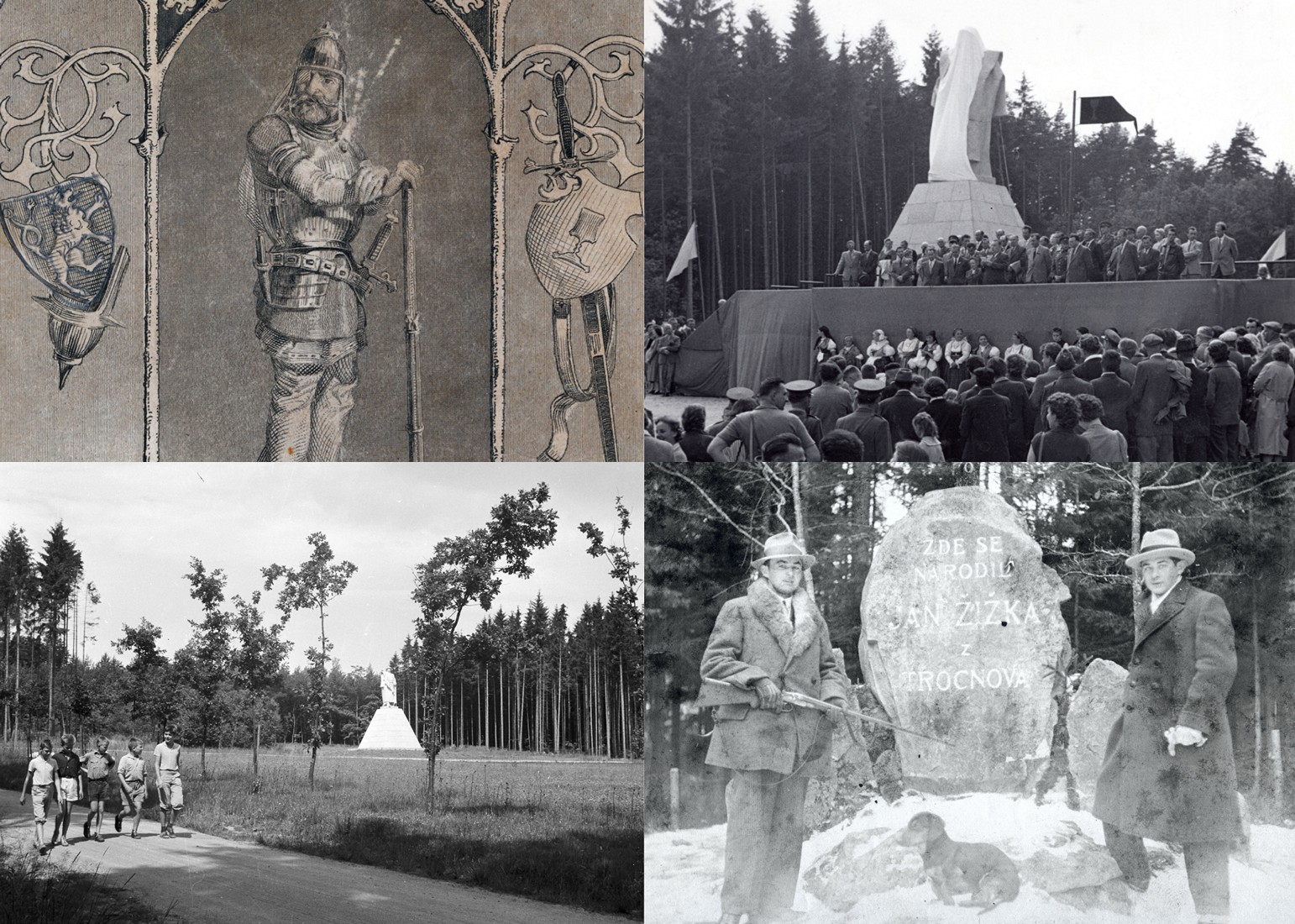
Trocnov was not large in size, consisting of two freehold farms. One belonged to Žižka's parents, the other to his paternal uncles. He inherited the family estate around 1378, but sold it in April 1380 and offered his services to the royal court.
16th–19th centuries
Over the centuries, the Trocnov farmsteads were damaged during the Thirty Years' War and had to be demolished. In their place, the Borovany Monastery and later the Schwarzenberg family built a new farmstead, and most of the Trocnov area was reforested.
20th–21st century
In 1923, ownership of Trocnov passed to the state, and the Trocnov complex was opened to the public in July 1960 on the occasion of the grand opening of the newly reconstructed birthplace of Žižka. At that time, a monumental 13-meter-high monument made of white Liberec granite, designed by sculptor Josef Malejovský, was also completed on the grounds.
Since 1978, Trocnov has been protected as a national cultural monument.
In 2011, the South Bohemian Region took over the building and handed it over to the South Bohemian Museum in České Budějovice.
Since 2020, a new open-air museum has been under construction on the site, presenting an analogy of a high medieval village based on archaeological finds and period research.
At the end of 2023, the construction of the Archeoskanzen was completed, and at that time, the museum received information about the approval of the project to build a Visitor and Education Center, which offers dignified facilities for visitors and employees of the complex.
In April 2024, construction began on the Visitor and Education Center, which will include a new museum exhibition area and operational and technical facilities.
After two years of construction work, following the successful completion of the building and its subsequent outfitting, a new Visitor and Education Center—featuring a museum exhibition area and the necessary infrastructure and operational facilities—will be officially opened in April 2026 at the National Cultural Monument “Birthplace of Jan Žižka” in Trocnov.
In the next phases (2026–2028), plans call for the construction of a playground and the expansion of the access road’s capacity with an integrated bike path.